Showing posts with label Asanas. Show all posts

06 September, 2010

Natarajasana

Nata means dancer and raja is the word for lord or king. Shiva is the King of Dancers. This pose reveals Shiva's attributes. Shiva represents transformation or change. He represents the dance of our lives, the changes, illnesses, relationships, the emotions, etc.

Shiva is also the deity of stillness, meditation, calmness, introspection and peace. Practicing this pose provides an opportunity to find the stillness within the motion. Because it's such a challenging balance, one must cultivate a quiet and focused mind. In order to remain still and balanced we must be completely present.

(from various sources on the net & books)

For me the biggest challenge was to open up the shoulders. To actually experience stillness within, the pose needs to be practiced more & held longer :)

30 August, 2010

Headstand


See the world from a totally new perspective. It broadens your vision!!! Sirshasana makes me feel calm & alert at the same time. It has huge benefits which are elaborated below.

This asana leaves so many positive effects on the body and mind that it is called King of the Asana. It enhances blood supply to the brain and calms it. It helps relieve stress and mild depression. The regular practice of this asana increases intellectual clarity, improves will power and respiration. It stimulates the pituitary and pineal glands. It strengthens the arms, legs, spine and lungs as well. It tones the abdominal organs and Improves digestion. It helps relieve the symptoms of menopause. It helps to cure minor (common cold, cough and sore throat) to major ailments like asthma, infertility, insomnia, and sinusitis.

23 August, 2010

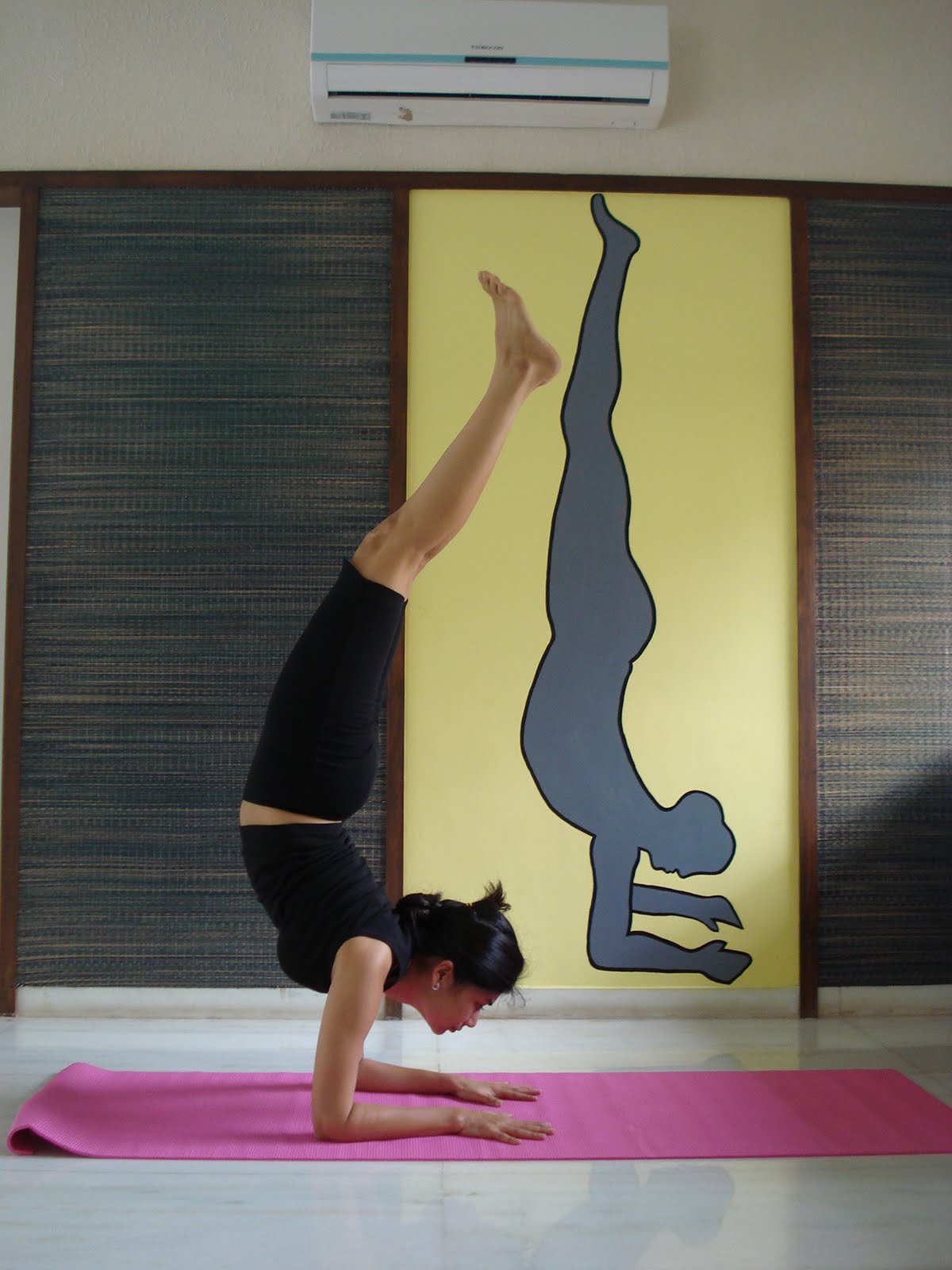
Challenges of Pincha Mayurasana


Many :-


Firstly, it just feels awkward to start off with this kind of an inversion. Viparitkarni, sarvangasana, halasana, sirshasana are all still fine, but this is weird to start with.

Secondly, it's easy to get it on the wall. But the transition from the wall to slightly away to the centre of the room is really difficult and needs a lot of mental preparation (more than the physical)


Thirdly, you have to learn to fall on the otherside with grace. Because if you are going to make the transition from the wall to the centre of the room, you better practice that well, as you are going to fall many times over and unless you learn the grace of falling you will go into a shell & refuse to grow after that initial fall.


But as Shri Pattabhi Jois puts it "Yoga is 99% practice, 1% theory".


Last but not the least, getting these kind of postures give you a different high which only a true yoga enthusiast can understand :-)


02 March, 2008

Hastapadangushtasana


(The pictures are not that clear as they've been taken informally from a cell phone.)
Initially when i started practicing this asana, even keeping the leg straight from the knee was very difficult and balancing even more trying. It is a very important asana as it works on the faculties of balance, strength, concentration, flexibility and endurance. Once you grow in the practice, you can move from the straight to the side version without putting the leg down. One more thing to be aware of is keeping the bottom or the supporting leg straight. It will come only with practice. Certainly, people who thought yoga was boring and not challenging should rethink, and try some of these techniques!!!

06 February, 2008

Dwi Pada Viparita Dandasana

or Upward facing two-foot staff pose

I go into this pose after going into chakrasana. The pose can be done in various stages. The first one is when you keep your legs bent, then straighten one leg at a time. You can also take a twist by taking both legs to the side, or taking one leg up in the air. It is an intermediate pose with some advanced variations.

The compression you feel in the back is worth the expansion of your abdomen and chest areas. It also has a few effects of sirshasana.

For a perfect execution of this pose, look up in Yoga Journal.

15 January, 2008

Crane pose / Crow pose


Again a lose attempt compared to this.....

Some books refer to this as Bakasana (crane pose) whereas others as Kakasana (crow pose). Anyways I feel unless you can stay in this asana for more than 30 seconds (which i m glad i can :-)) you should not attempt the other two asanas mentioned below. i.e. side crane and ashtavakrasana. Initially place a pillow under your head to avoid any injuries.
The essence of yoga and life is to keep challenging yourself and keep attaining higher goals in whatever you do with a detached attitude.
Enjoy!!

Side Crane pose


I know i am far from perfect but the effort is certainly on to get there. You want to see the perfect pose.................... go here. Everything about the anatomy, benefits, the steps of getting into the pose, preparatory asanas are explained here beautifully. It leaves me only to share my experience with this pose. I can now hold it for barely 15 seconds. You may also feel a slight pain on the quadriceps resting on your thigh because of the pressure created. And it works wonders for building a shapely upper body.

11 January, 2008

Ashtavakrasana


Who said yoga can't help build & tone muscles? You do this asana regularly and you don't need any weights to be lifted. There are many such postures in yoga which makes practicing it very inters ting, challenging and meditative.
It's an extremely strenuous pose, requires a lot of strength as well as balance. It not only strengthens the upper body and wrists but also the abdomen and helps in inculcating a sense of balance within us. Don't forget to practice it on the other side as well. You need an absolutely cool mind for doing it as a little mental disturbance plays havoc with the balance in this asana.
Though i sit on the floor and come up in the asana, one can stand and get into it for more challenge. Also it's important to keep the weight on the whole palm and not only on the heels of the palms which generally tends to happen.
Enjoy your practice...........

02 January, 2008

King of Pigeons Pose


Quite a challenging asana and as you can see in the picture above, I need a lot of improvement. The back leg has to be flat on the floor, pelvis more forward and arched and a better back bend. A little more flexibility in the shoulders to be able to push the arms back is also required. The pose should be attempted only after a good asana workout. You'll feel a tremendous compression in the lower back especially on one side, so the muscles and ligaments have to be strong & supple to bear that. Follow it up with child's pose for sometime to relax the body.

For more on this you may read articles one & two on Yoga Journal or refer "Light on Yoga" by BKS Iyengar.

04 December, 2007

Personal Note


I have been practicing the headstand (shirshasana) for many years. Started as a kid doing it against the wall but have taken it more seriously since the past couple of years. And i have surely progressed. From the wall, to a foot away from the wall, holding for 10 seconds to 1 minute, 3 minutes and now i can hold with ease for even 7-8 minutes.

The point i want to make here is that, there is absolutely no short cut to anything. We have to be persistent and patient. And the results will come slowly, step-by-step. That's how life is!!

03 December, 2007

Variation in the Warrior


After going into Warrior - I, (with arms up in namaste), slide the same arm as that of the back leg down to the heel and take the opposite arm over the head. Tilt the head to look towards the heel. A nice variation to the warrior. It strengthens the legs as well as gives a nice twist to the spine. Hold it for as long as comfortable & change sides.

Enjoy your practice!!!

24 October, 2007

Chakrasana - Wheel Pose


It's an extremely invigorating pose, slightly difficult to get in the beginning but achievable with a little determination & practice. You can go into the pose lying down or even standing.

Lying down on your back, bend your legs keeping them hip width apart, rotate your arms to put them behind your shoulders, fingers pointing towards the shoulders. Push your feet and palms on the floor to lift your body up. Some people go inhaling into the pose while some go exhaling. Stay there for a comfortable count and lower your body down.

Standing with feet shoulder width apart, put your palms on the waist bending backward, bend your knees, release your hands behind and glide your palms on the floor to come into this asana. This is much more challenging so should be attempted only after a proper practice.

In any case, do your practices under the guidance of a teacher only.

Lifting the heels up as i have attempted here provides better contraction to the spine & elongation to the front of the body.

Experience the stimulation you get and ENJOY!!!

07 October, 2007

Full Split - Hanumanasana


It's a very challenging pose but achievable with continuous practice. I too have to perfect it still. Apart from extreme flexibility, what is required here is tremendous strength in your back to hold the hands up in a namaste. It gives an immense contraction at the lower back. Keep your palms folded, as you are bent over your leg and then come up breathing in. It also needs core strength (deeper muscles of your abdomen) to come up like that. But please don't even try attempting it without a proper workout (i don't mean just a warm up!!)

Have a fun-filled & challenging practice.

27 September, 2007

Headstand variation


Since i have recently blogged about the traditional headstand i thought it would be good to continue with it. i am not intent in taking names of each variation as they might exist in some schools (of yoga) might not in others; and will definitely have different names for a similar variation.

This is not at all a difficult variation if you are relatively comfortable with sirshasana. The only thing you have to be careful about is bringing back the legs together keeping them straight; as it might be a little challenging. Moreover it also stretches the inner thighs & pelvic muscles. Explore and discover............!!!

14 September, 2007

Setu Bandha Sarvangasana - A Variation


All back bends are energizing & invigorating, & this is no different. It's a challenging variation of the setu bandha sarvangasana (bridge pose). After getting into the bridge, support your back with your palms, walk the legs further, balance properly, slightly tuck in the abdomen & then lift one leg up. The weight of the body is borne on the palms, wrists, elbows & shoulders. It gives a definite contraction to the lower back muscles and strengthens the core (abs, back). But again, it should be done under someones' guidance unless you have been practicing for a long time; and after a good warm up.
Challenge yourself and attain newer heights in everything you do in life!!

08 September, 2007

Headstand – The King of Asanas


Sirsasana is not called the king of asanas without any reason. There are a host of physical, physiological, mental & spiritual benefits you derive from practicing headstand. As it’s a pose against gravity, it gives us a lot of confidence of overcoming fear of falling.

Try and cultivate the attitudes of vairagya (detachment) – of letting go of the fears, ego, surrendering ourselves, humility; and aishwarya (self-esteem, self-confidence, sense of achievement) would follow. The benefits of this asana would accrue more at the physical & mental level if practiced with utmost dedication & concentration. For eg when you try to let go of the fear of falling, it translates into your life by giving you the confidence to accept greater challenges. Believe me, it does happen!!! It also gives tremendous satisfaction with your own being.

There is a line of perfect alignment in headstand with which if you stay gives you a feeling of lightness. And that is what you should aim for. I try to do headstands regularly for about 3 minutes followed by child’s pose for a minute. And I don’t know whether its because of that but my hair, skin quality has improved; so has my memory & sharpness of the mind. There are many variations which you can do of this pose & which I’ll blog on subsequently.

Note: Headstand is an intermediate / advance pose (depending on the variations) & to be strictly done under the guidance of an experienced teacher.

For more on this refer to: Asana Pranayama Mudra Bandha (Bihar School), The Sivananda Companion to Yoga, Light on Yoga (BKS Iyengar), Yoga Journal.

06 September, 2007

Squat - A variation


This is a nice variation of the regular squat and can be added to your practice as an individual asana or part of the suryanamaskar sequence. It not only strengthens the quadriceps (thigh muscles) but also gives a good twist and a squeeze to the spine. Try and twist more using the elbow to push your chest out more. People with knee problems ought to be careful!! In this picture because of lack of awareness one of my knees is slightly out, but maintain both at the same level. Hold it till you are comfortable with your discomfort :-) Add spice to your practice & have fun. Ciao.....

30 August, 2007

Mandukasana - Frog Pose


It's an anti-flatus, constipation relieving pose, very good for elimination. One of the favourite asanas of Swami Ramdev, and rightly so.

Start with sitting in Vajrasana (legs folded, toes out); make fists of both palms with the thumb inside, put them on either side of the navel; inhaling straighten your spine up; exhaling bend forward completely and then slightly lift the chin up for better compression. The wrists have to remain upright when you bend forward and not flatten out. Breathe normally as you stay here for sometime starting with 20 seconds and slowly building up to 3 minutes.

The place where you put the fists are the ascending and descending colon. By putting pressure you are stimulating the process of elimination. You can do this asana early in the morning to get maximum benefit. People who are suffering from any kind of abdominal ailment like ulcers, colitis etc. should attempt this only after they are relieved of that. Proper elimination is the key to better digestion. So keep practising!!

21 August, 2007

Paschimottanasana - Head to Knee Pose


Apart from the one shown in the picture, there are various other ways in which one can do this posture:

1. Sitting in a chair just bend forward and rest your head on the knees

2. Standing without any support

3. Standing against a wall

4. Dynamically with rowing movements sitting on the floor

This is one of the first asanas mentioned in the ancient texts of yoga. It has immense benefits to the whole body particularly the abdomen area and the back. Improving digestion, circulation, strengthening back muscles, stretching hamstrings etc are just some of the benefits. It stimulates the swadhistan chakra (nerve plexus) located 2-3 inches below the navel.

However caution has to be exercised. when you are bending forward, bend from the waist & not the upper back and shoulders. You have to emphasize on extending the back to its maximum capacity & then relaxing the neck down. Observe that the more you relax in this pose the better it gets. So just let go!!! If you can hold the asana for a longer time say a minute at least, focus first on the physical, then move to the breath and then your emotions. Bring in a feeling of letting go of ego, surrendering yourself, forgiveness and relaxation of effort.

Try not to push and pull too much. People with high BP should not do the standing variations & also be careful with the sitting ones. Those with cervical problems do not bend the neck forward. Keep it in line with the rest of the back even if it means restricting the asana. Pregnant women can modify the sitting variation and make their head rest on a low stool for comfort.

For me, each variation gives me a different experience. The standing ones make me feel energized at the same time relaxing my back, the dynamic one warms me up, the traditional sitting calms me down and strengthens my back. There is so much one can write on this but i'll be happy to answer any of your queries while restricting myself to this paragraph. Test the flexibility of your spine and ENJOY practicing!!

04 August, 2007

The Diamond / Complete Supta Vajrasana


  • Stand on your knees. Put your palms on your back & start bending backwards.
  • Arch back & put the palms on the floor.
  • Lower your head & put your elbows down.
  • Try to take the head as close to your feet as possible.
  • You can also use the wall to lower yourself down. Put your palms on the wall first & slowly walk them down to the floor.

    I still have a lot of scope for improvement in this pose. It’s quite a challenging pose & gave me confidence after I achieved this much. Try it only if you are an intermediate student but after a good session of asanas. It gives tremendous compression in the back so relaxation is very important after doing it. It tones up the entire spinal region & gives good circulation to the pelvic organs. However, it should not be attempted by anyone with an ailment or condition like blood pressure, hernia, cardiac problem etc.

    The pose is also given in these books: The Sivananda Companion to Yoga, Light on Yoga by BKS Iyengar